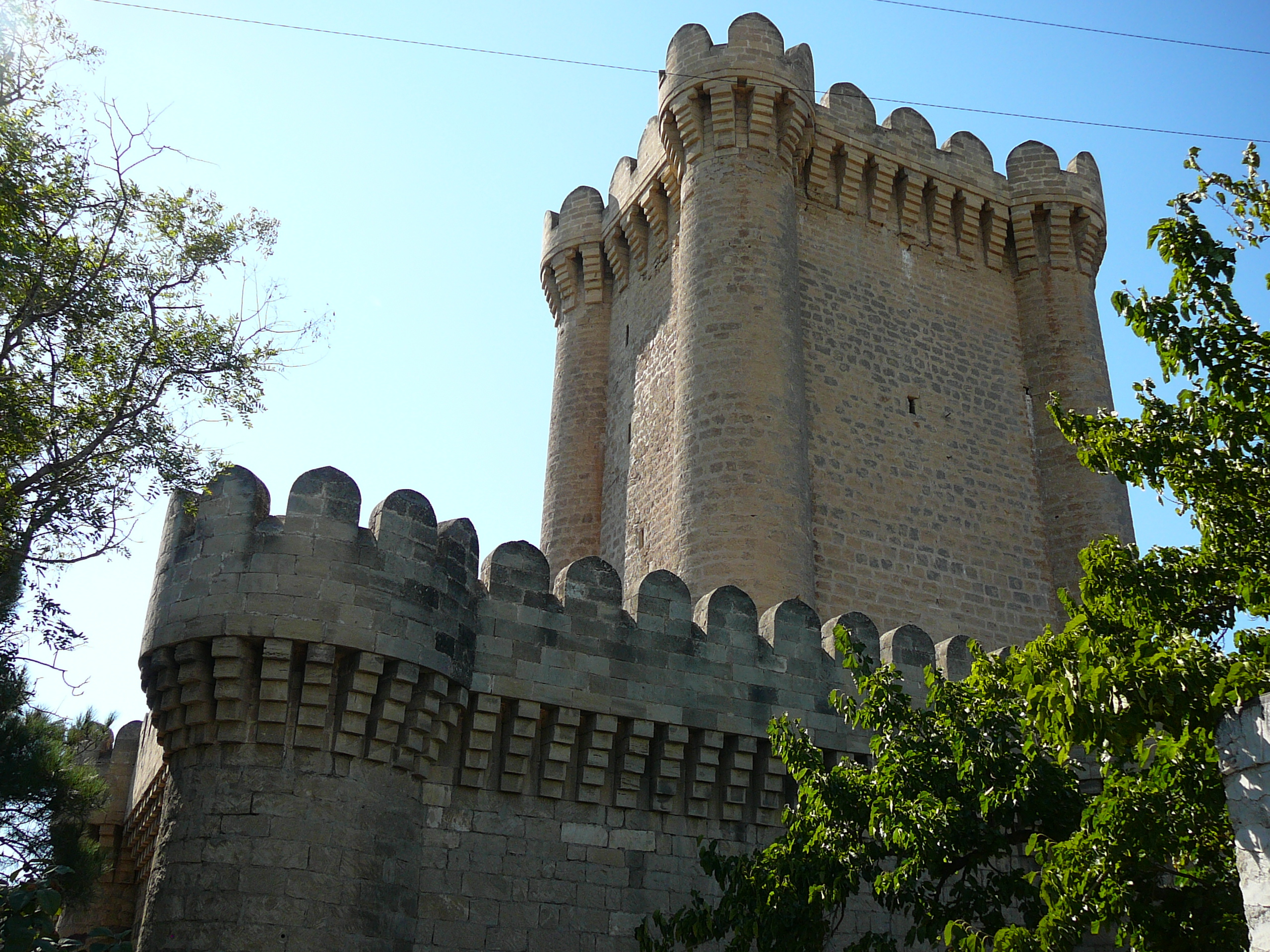
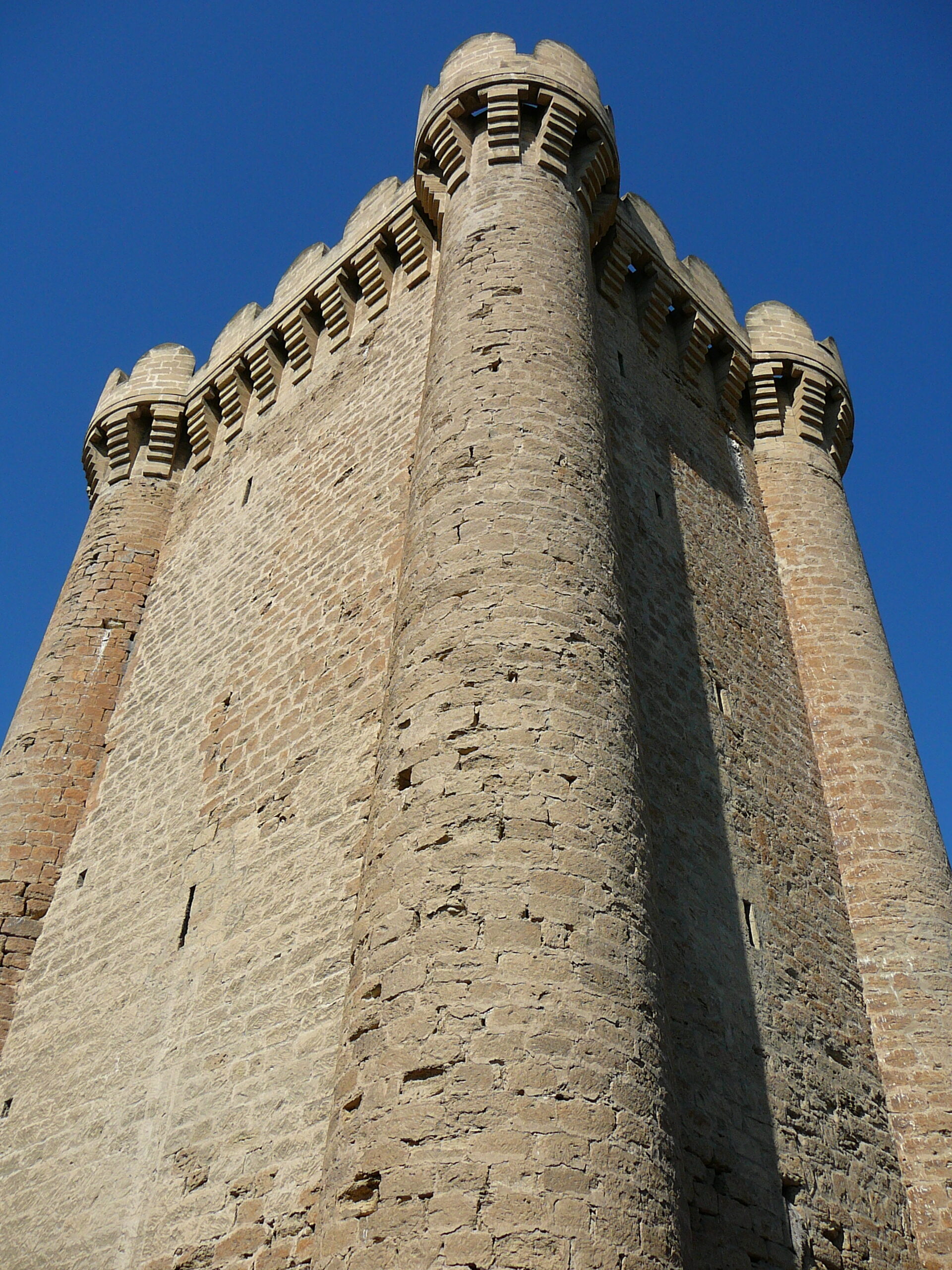
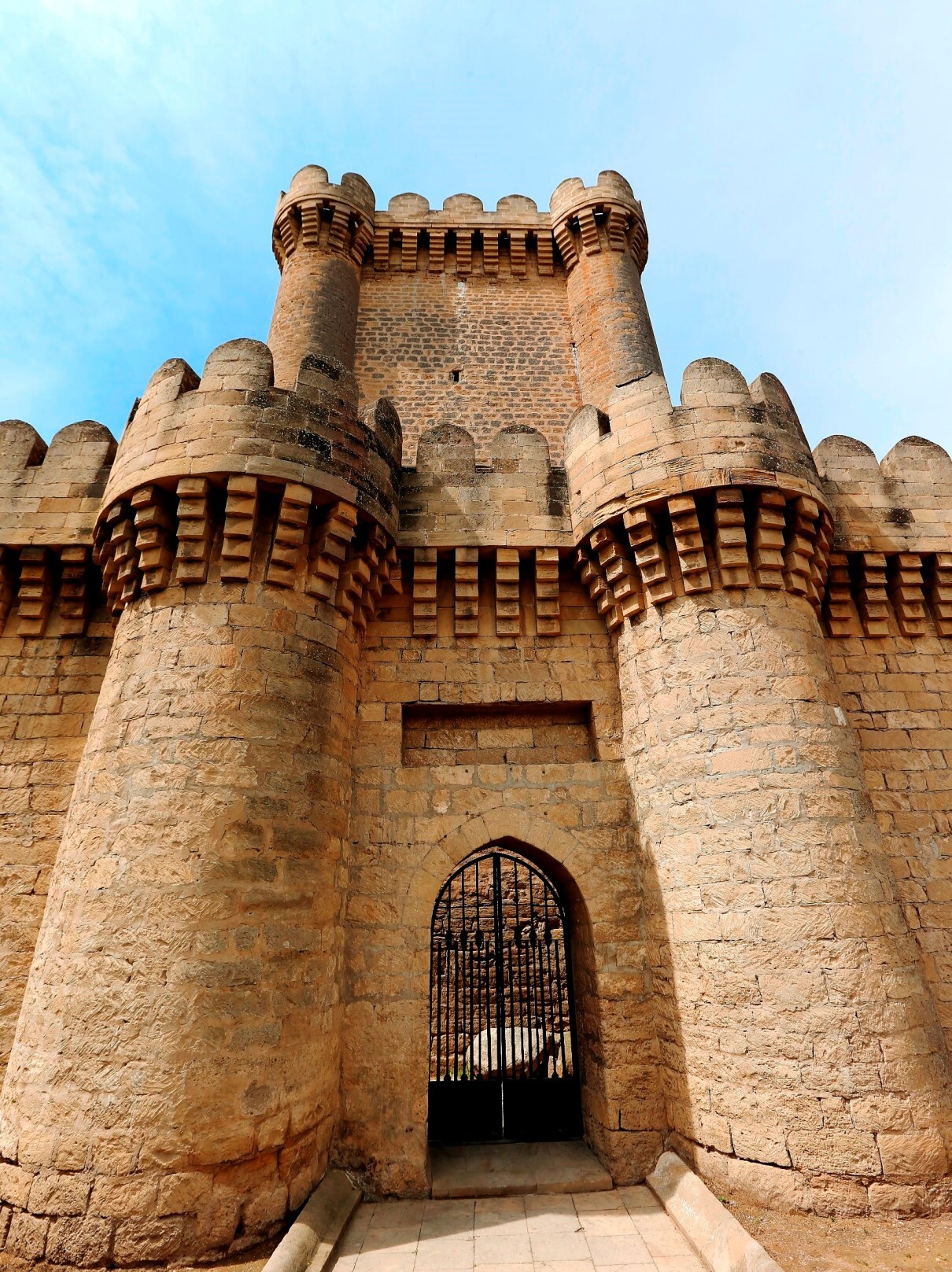
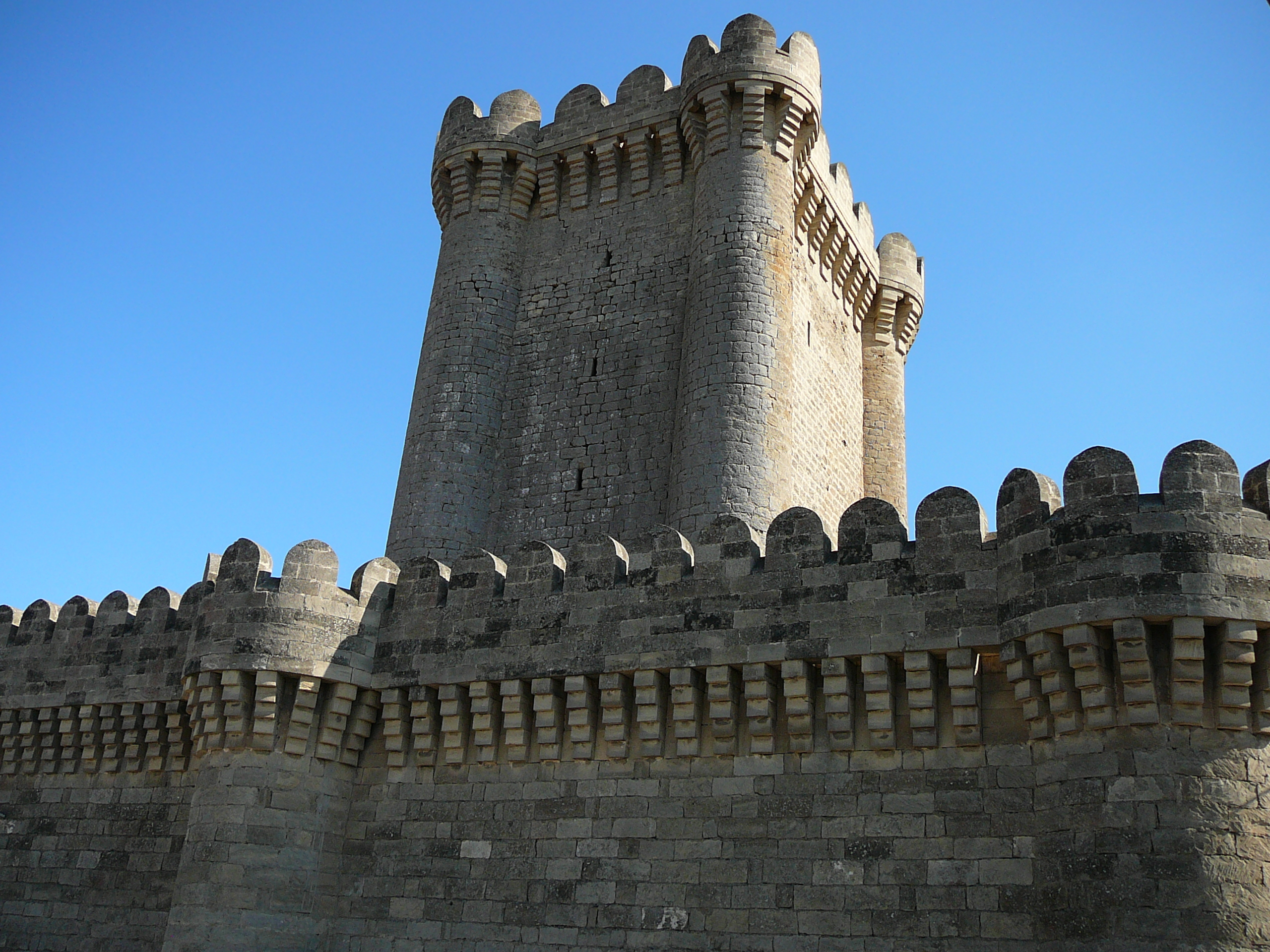
Name of the monument: | Great Mardakan Castle |
Address of the monument: | AZ1076, Baku city, Khazar district, Mardakan settlement, intersection of Rafael Jafarov Street and Kolkhozchu Street |
Significance of the monument: | An architectural monument of world importance |
Inventory: | 4.1 (Registered by the Decision of the Cabinet of Ministers of the Republic of Azerbaijan No. 132 dated 02.08.2001) |
Cartographic presentation: | X-coordinate: 40.492028 Y-coordinate: 50.140673 |
History of the monument: | Century: XII century Year of construction: 1187-1188 |
Use of the monument: | Used as a venue of demonstration |
Historical information about the monument: The Absheron Peninsula is rich in world importance architectural monuments. One of them is the Great Mardakan Castle in the Khazar district of Baku.
The name of Shirvanshah Akhsitan bin Manuchohr was mentioned in the epigraphic plaques found in the monument in Mardakan settlement. The Russian scientist I. Berezin, who was here in the first half of the 19th century, had seen the gate still intact and noted that there was an inscription on it. The inscription was discovered during a clean-up works in 1940. The book says: "This fortress was built by Amir Abu Nasr Izz-Al-Mulk Abu Ali ibn Bakir." The person mentioned in the book is believed to be the military commander of the Shirvan army.
Once upon a time there was another inscription on the castle. At present, the inscription engraved on these two layers of stone (1.94 x 0.58 x 0.61 m) is kept in the Hermitage Museum in St. Petersburg (Russia). The inscription was found near the castle in 1853 and was sent to St. Petersburg. The Arabic inscription reads: “Shirvanshah Ahistan ibn Manuchohr, the ruler of the world and Islam. Five hundred and eighty-third year”. That is, 583 AH, 1187-1188 AD. This note clearly shows the date of construction of the fortress.
The castle was an active place of protection, a shelter for the people living in the area during the attack, as well as a lighthouse or minaret, ie an observation post. During the reign of the ruler of the Shirvanshah state, Akhsita I (son of Manuchohr II), a large fleet was created in the port of Baku. In 1175, the Russians, who attacked Baku with 73 ships, were prevented by this fleet. In 1191, Shirvanshah Akhsitan I moved his estate from Shamakhi to Baku, and thus Baku became the center of the Shirvanshah state for the first time.
The passport of the monument, drawn up in 1976, states that the restoration of the castle was carried out in 1955. Based on the existing photographs of the building, it was possible to determine the height of the castle walls and restore the part that completes them. The collapsed parts of the 8-meter-high tower wall surrounding the tower have been restored.
Archaeological excavations have revealed a south-west entrance to the castle on the east side of these walls. According to the brackets left in the upper part of the donjo, the destroyed parts and the mashikuls that completed it were restored. In the interior of Donjo, which is divided into five floors, only the arch structure of the first floor survives. At other levels, the slots in the wall indicate that they are covered with a rectangular wooden structure.