Name of the monument: | Tombs complex |
Address of the monument: | AZ2251, Goranboy region, Rahimli village cemetery |
Significance of the monument: | An architectural monument of local importance |
Inventory: | 4263 and 4265 (registered by the Decision of the Cabinet of Ministers of the Republic of Azerbaijan No. 132 dated 02.08.2001) |
Cartographic presentation: | X-coordinate: 40.580261 Y-coordinate: 46.743481 |
History of the monument construction: | Century: XVIII-XIX centuries Year of construction: Not known |
Use of the monument: | Used as a venue of demonstration |
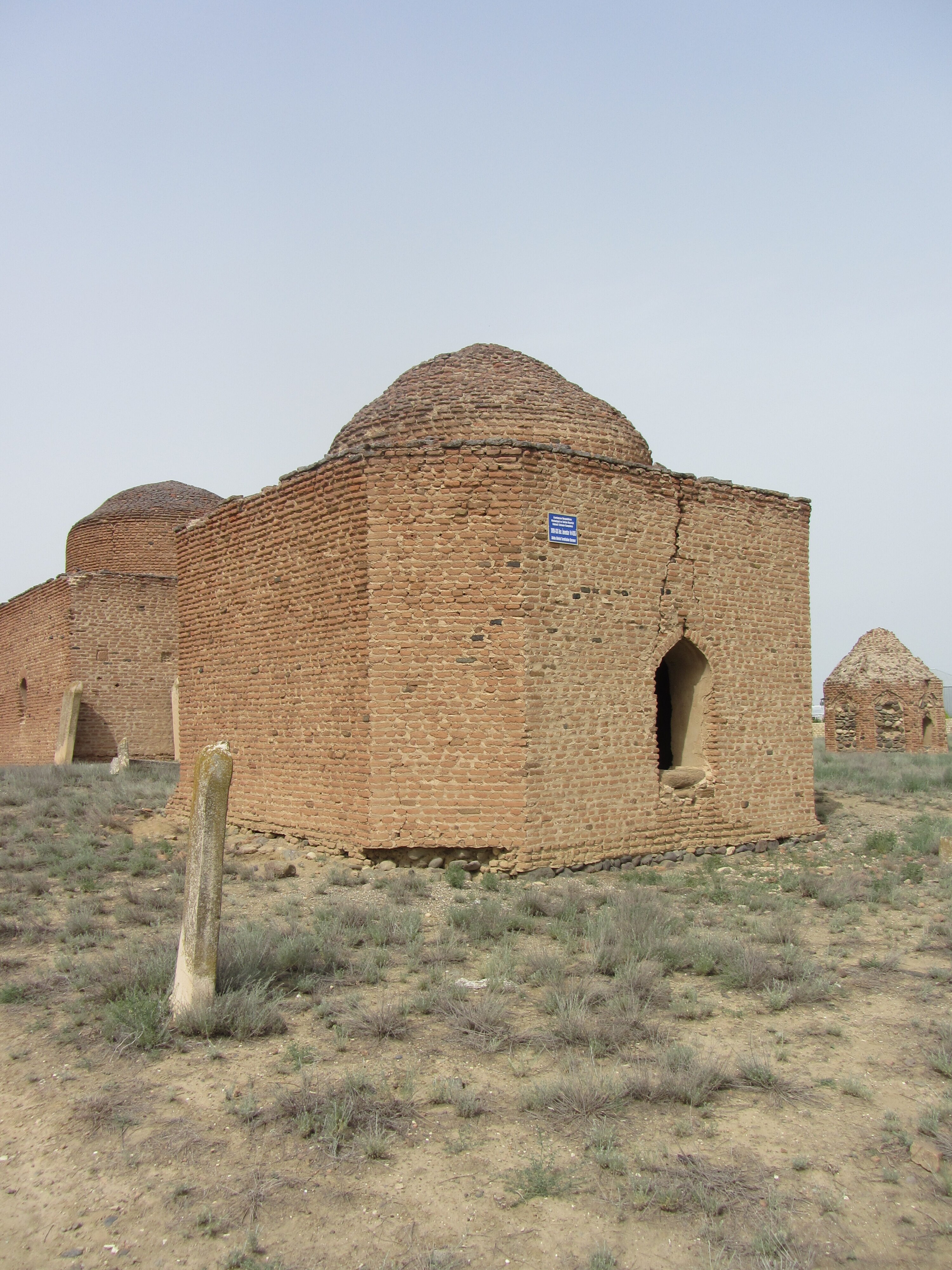
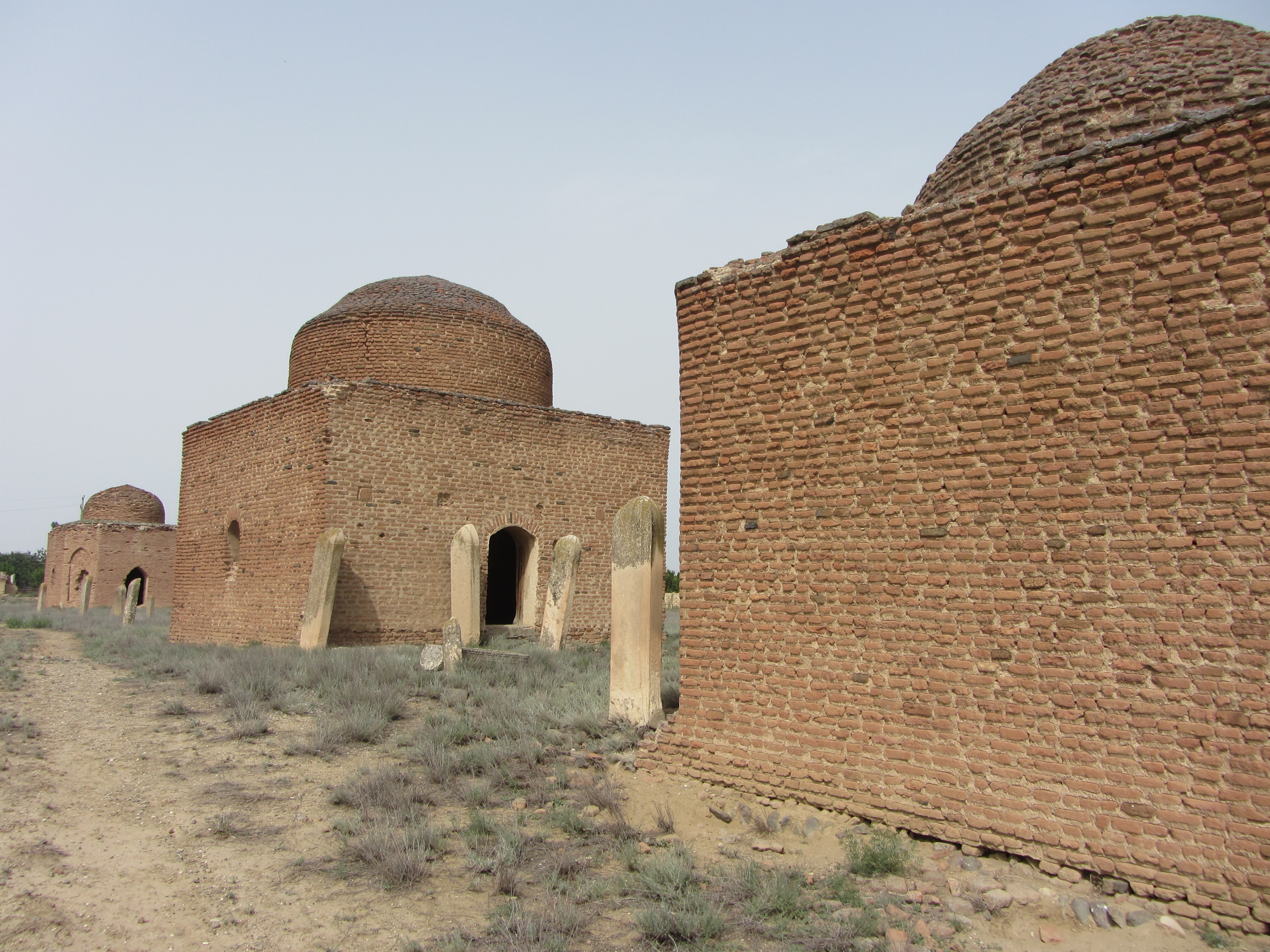
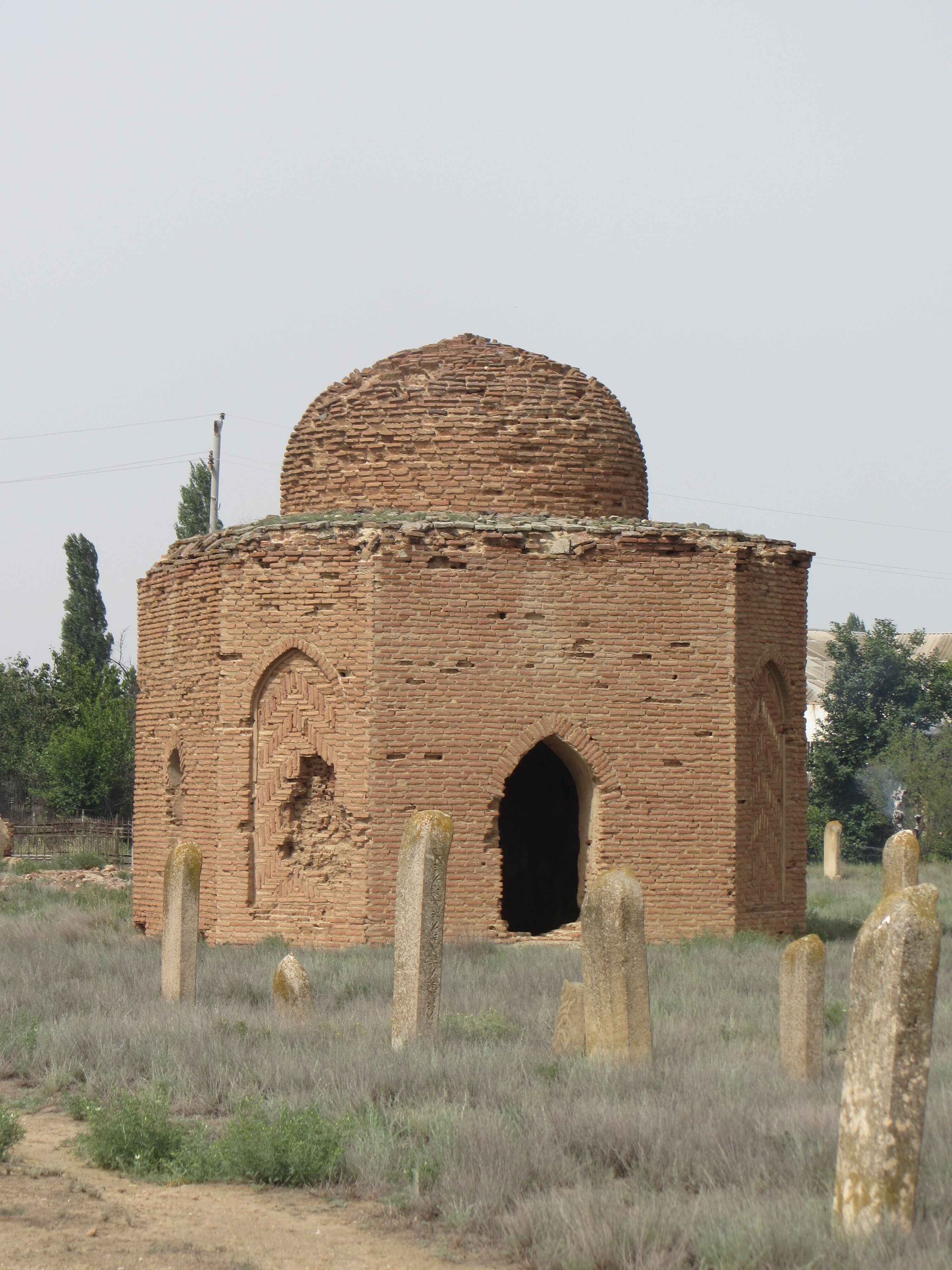
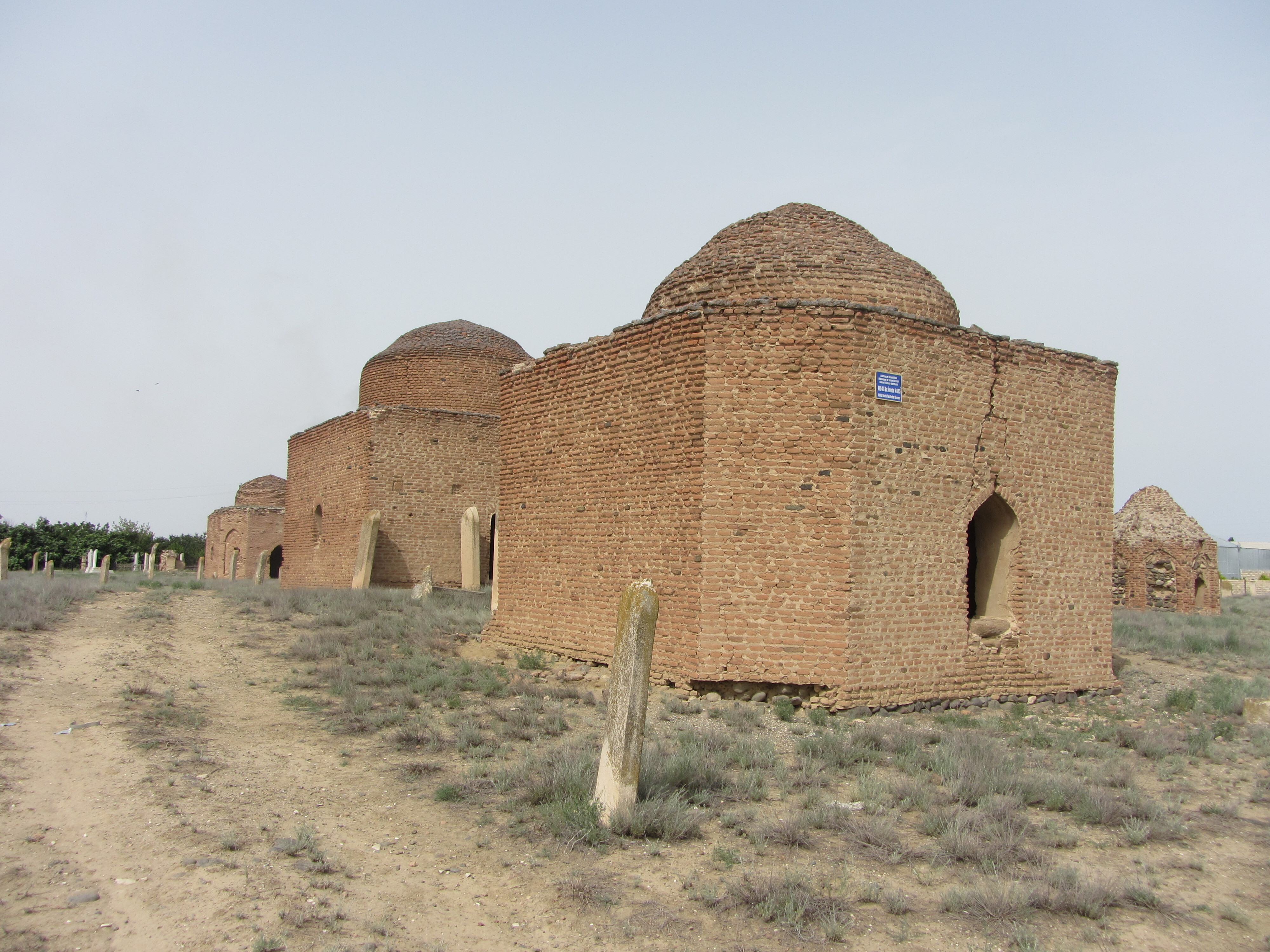
Historical information about the monument: The fact that Ganja was the provincial center in the middle of the 19th century had a positive effect on the development of the surrounding villages and settlements. In this sense, the tombs in Rahimli village of Goranboy region are interesting examples. Six tombs belonging to the Mirza Adigozal bey family, an architectural monument of the XVIII-XIX centuries, are located in the cemetery on the outskirts of Rahimli village. There are 4-5 graves inside each building and it is functionally reminiscent of Ganja tombs. The difference is that Rahimli's tombs are square-shaped on the inside and 45 degrees on the outside. Large windows on all four sides are also characteristic of these tombs. The tombs are located at a distance of 10 m from each other. Four large tombs are made of baked red brick, and two small tombs are made of river stone. Three of the tombs are octagonal and three are rectangular.
The octagonal tomb, located a little higher, has nine tombstones (stella). These graves belong to Mirza Adigozal bey, the author of the famous work named "Garabaghname", historian and public figure, and several members of his family. The headstone belonging to Mirza Adigozal bey reads: “This radiant, pure and glorious tomb belongs to Mirza Adigozal Bey, the leader of the late sages and protector of the poor, the refuge of the virtuous and scholars, the only one of the time and the century, the son of Hagverdi agha, known among foreign and domestic tribes and the remedy for hardships”. The tomb was built in 1848 in connection with his death.
The second tomb is covered with a hemispherical dome from north to south. There is an inscription in the Arabic alphabet on the western wall with a door in the southern part and windows on the other side, indicating that the tomb belongs to the family of Mirza Adigozal bey. There are five graves inside this tomb. There are two graves inside the third quadrangular tomb, the first of which belongs to Mirza Adigozal bey's close relative Mustafa agha, and the second tomb belongs to Mustafa agha's wife Shamaga khanum.
The entrance gates of the three tombs, built of red brick and covered with a hemispherical dome, are located very high above the ground. A large red brick tomb in the south and a small river stone tomb in the south collapsed. One of the small tombs has a polygonal plan and an octagonal shape. The second tomb located relatively east and high, is octagonal. Examples of material culture found in the settlement near this tomb show that they belong to the XII-XIII centuries. This monument is important both in terms of architecture, epigraphy, calligraphy and engraving.